The Project
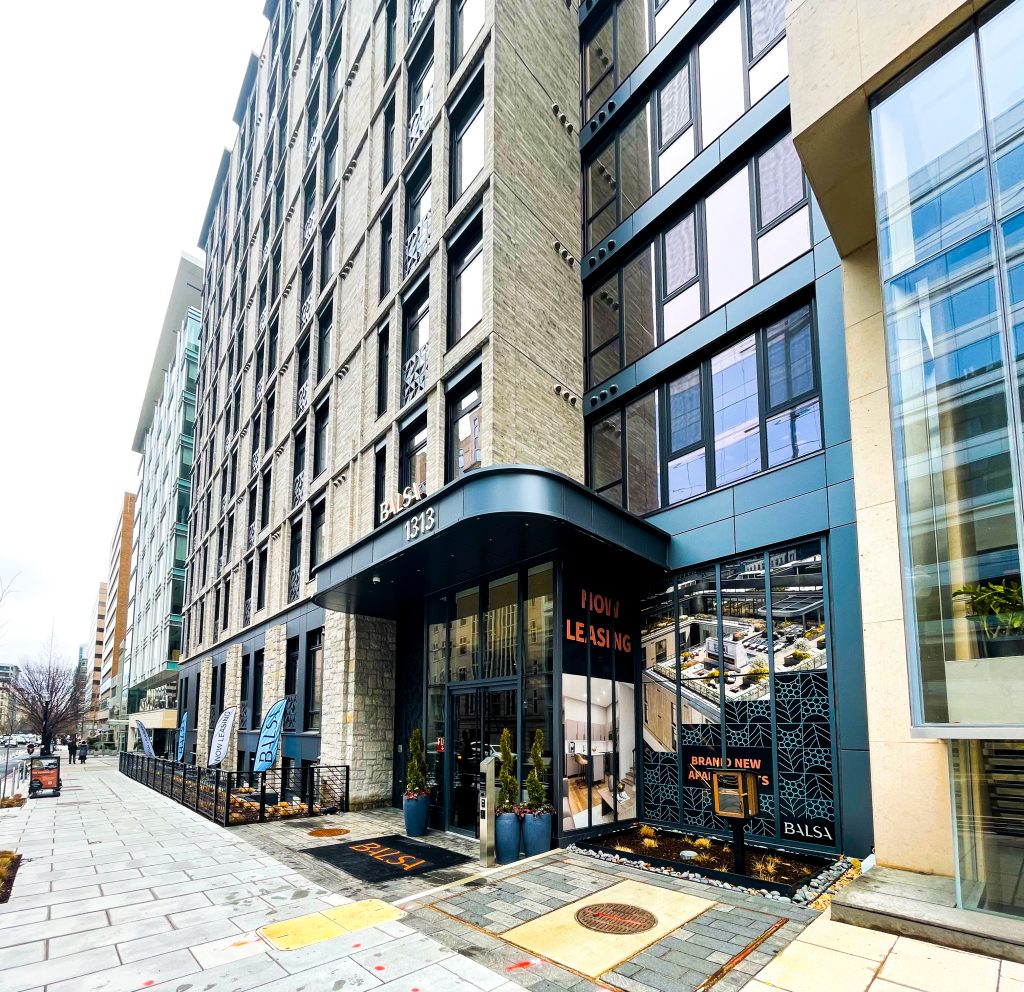
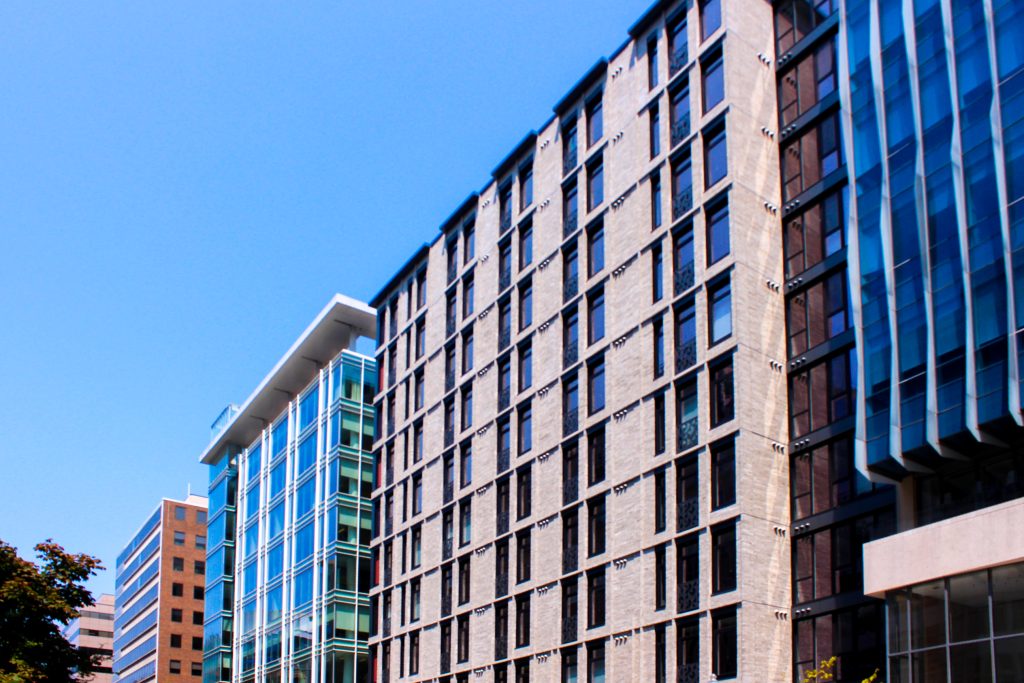
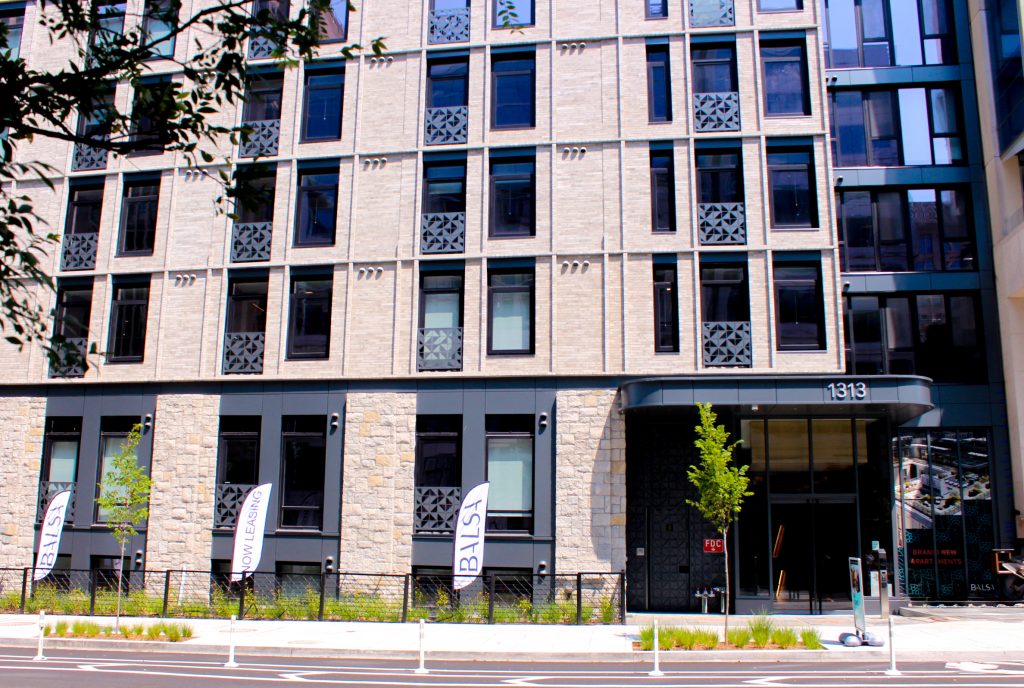
An office-to-residential building conversion transforming a 1980’s-era office building into much-needed housing in Washington, DC’s central business district.

The Challenge
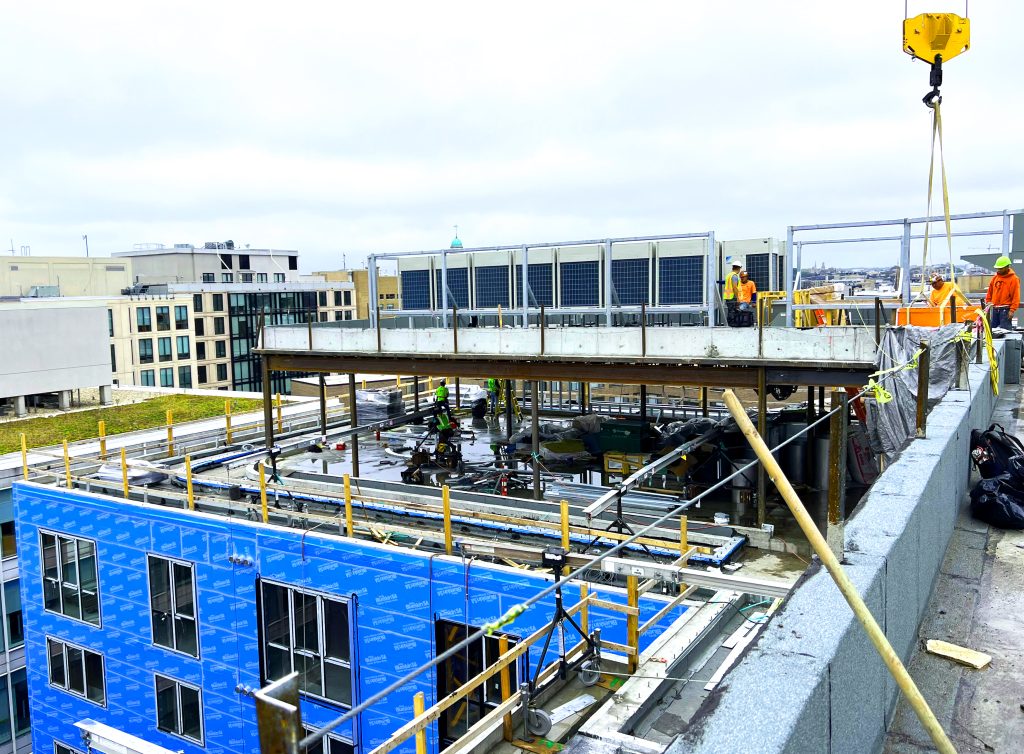
The design team faced challenges in both the design of the building retrofit as well as during construction due to unforeseen conditions within the existing structure.
- The additional load from the conversion and vertical expansion required enlarging the existing column footings and reinforcing existing columns and floor beams.
- The existing lateral system was insufficient to support the vertical expansion and new architectural layouts, so the team integrated a new lateral system into the original structure.
The Solution
Ultimately, the design team developed a series of complex design solutions to meet the demanding technical challenges encountered.
This project addresses one of the biggest issues facing today’s urban centers: rising office vacancy and housing density shortage. The building reused and repurposed a substantial amount of existing structure, especially by eliminating new excavations. Beyond revitalizing urban infrastructure, adaptive reuse and the conversion of existing buildings offer a significantly more sustainable alternative to demolition and new construction – preserving resources, reducing waste, and lowering environmental impact.
Balsa serves as an example of how thoughtful engineering and architectural design can creatively transform underused existing office buildings into vibrant residential centers.
Adaptive reuse of office buildings into multi-family residential spaces is a win-win for cities. It helps address housing shortages, revitalizes urban centers, and promotes sustainability by reducing waste and carbon emissions. By prioritizing reuse over demolition, cities can create more resilient and environmentally friendly communities.